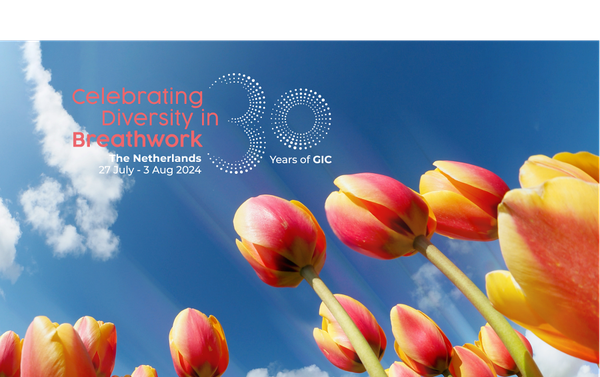
At the time of this writing, we count only five weeks before the magical breath festival GIC2024 starts. July 27th is the magic day.
Everything in the Netherlands seems to be preparing for your arrival: the sun is making a comeback, the bicycle bells are ringing invitingly and the tulips are stretching out to welcome you, breathworkers worldwide!
Everyone looks forward to it, and the organizing team is especially excited. Here are some instructions on how to ride your bicycle.
If you haven't booked your room yet, please do so with some urgency. Bookings are coming in fast these last weeks so don't fish behind the net… (Dutch expression;-)).
If you are coming to the GIC, please do not forget to fill in the two forms
To give you a soft landing in the hills of Berg en Dal we would like to ask you to fill out the two registration forms and mail them
back to us as soon as possible. We will then ensure that your wishes and requests can be met to the best of our ability. In case you subscribed and did not receive the two forms, please check your spam box.
Workshops
The GIC stands and falls with organizing and participating in, the wonderful, inspiring workshops. If you are sure you want to give a workshop please let us know. Then we will make sure it is mentioned on the site and on social media so that other participants can already orient themselves on the various offerings. https://ibfbreathwork.org/workshops-2/
IBF Annual General Meeting (AGM)
This is for members and non-members who are interested in the development and workings of the International Breathwork Foundation. Discussions, decisions, and future directions
are addressed, including leadership programs and democracy in action. Members of the IBF can use their vote to elect new committee members.
The AGM will be accessible for members online. It will be streamed from 11.15 till about 13.15 CET daily from Monday 29 July
Appeal to the French connection
Do you remember: a few years ago, France hosted one of the largest GICs ever? Rarely before had a GIC had so many participants; however, this year there are only a few colleagues from France registered! This is therefore a call out to the “French Connection”.
You are warmly invited and we need and miss you!
The Nature of Disability
from Sarah Faulkner IBF Diversity & Inclusivity Workgroup
The theme of this year's GIC is
"Celebrating Diversity in Breathwork"
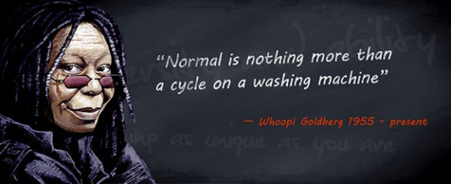
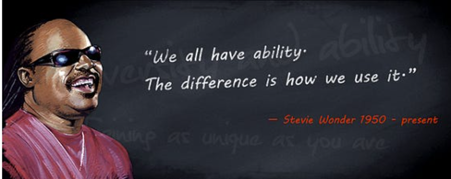
Every individual has their own way of thinking, learning, working, and doing different tasks. When this individual way is brought about by sensory perception issues (e.g. blind or deaf), by a medical or mental health condition, mobility difficulties, (e.g. wheelchair user), learning differences (e.g. dyslexia, dyspraxia), or neurodiversity (e.g. ADD/ADHD, autistic spectrum conditions),
then we recognise this difference and call it a ‘disability’.
The ‘medical model’ is a dominant way of categorising disabilities and utilises the somewhat negative language conventions of ‘impairment’, ‘disorder’ or ‘deficit’ to describe the condition/disability. Whilst the medical model is useful in terms of making a diagnosis and identifying
the support available, the term ‘disability’ - along with other strands of diversity - is both historically and currently, met with discrimination and negative stigma by society. Certain bodies and minds that do not move, or think, or look, or act in ‘normal’ ways are labelled as ‘missing’ certain abilities, hence ‘dis-abled’. The ‘social model’ of disability is also a dominant perspective and acknowledges that ‘disability’ is largely the product of environments, attitudes and polices which fail
to include the vast array of diversities. It is well evidenced that disabled individuals incur a greater financial and emotional burden in their everyday lives compared to their ‘non-disabled’ peers. The ‘social model’ also recognises every person’s dependence on support structures through technologies and interventions. Even so called ‘non-disabled’ individuals commonly rely on support such as glasses, computers, ladders, even warm clothing on a cold day! But when we think of ‘disability’ and
the interventions required by a disabled person (e.g. sign language interpreter, wheelchair, special medications), we encounter judgements and barriers, often about the additional expenses and the burdensome administration involved.
To fully banish discrimination and inequality would require morally flawless action on the part of every person and every institution - this is unlikely to happen in our lifetime! However, we can take a step closer and actively celebrate difference and diversity. A ‘celebratory model’
would go further than the ‘social model’ of disability, and view everyone as unique individuals who have their own brilliant skill set and celebrate everyone’s unique, diverse lived experience. Whilst an individual’s diversity may need strategies built around them to fully achieve their potential, society needs to ensure it does whatever it takes to always make this support available to everyone. The celebratory model suggests that if energy and time is put into building strategies around every
individual the whole of society benefits - the ability for an individual and for society to succeed becomes infinite.